Did the 48-hour thing for two weeks. Applied only to postings under 2 days old.
3 recruiter calls from 22 applications. Before that it was 1 from about 80.
Hey, glad it clicked. Keep the tracker going
Email reply after lesson 1Seven short video lessons on what each step of hiring actually measures. Without rewriting your resume for the seventh time, and without another month of LeetCode.
You've sent 200 applications. You heard back from four.
You've rewritten your resume six times. You know your stack cold. And you still blank on "tell me about a time when" in round four.
Nothing is wrong with you. Something is wrong with the pipeline you're feeding into, and nobody explains how it works because the people who know are on the other side of it.
Who I am and why this course exists
I'd been running interview loops for my company, so I thought getting the next job would be the easy part. It wasn't. I sent 60 applications in the first month and got two calls.
Then I did what I'd never done as a candidate: I wrote down what I'd actually been scoring when I was the one holding the scorecard. What made me write "strong hire" an hour after a call. What made me write "fine" and forget the person by Friday.
That became a manual, then these seven lessons. I also build Upskiller, and the Copilot in the bonus is the tool I wished I'd had in the round where I blanked on a question I'd asked candidates myself a hundred times.
Who this course is for
Dozens of applications, a handful of auto-rejections, mostly silence. You're not being rejected. You're being sorted before anyone reads your name.
You make it to the loop and the feedback is "we went with someone else". The scorecard was written from memory an hour after your call, and you never knew what was on it.
Or you're about to. The number was decided three weeks before the offer call, at minute twelve of the recruiter screen. There's one email that moves it.
The idea behind the course
Hiring isn't built to find the best people. It's built to process volume. Software ranks you by keywords and by how early you applied. Recruiters read the top of that list. Interviewers score you from memory an hour later.
Nobody's evil here. It's a system with broken incentives, and nobody hands you the map. Each lesson takes one gate, shows you what it measures, and gives you one thing to change that day.
What you get
The program
Each lesson is one idea with a name you'll remember, proof, an example, and a task.

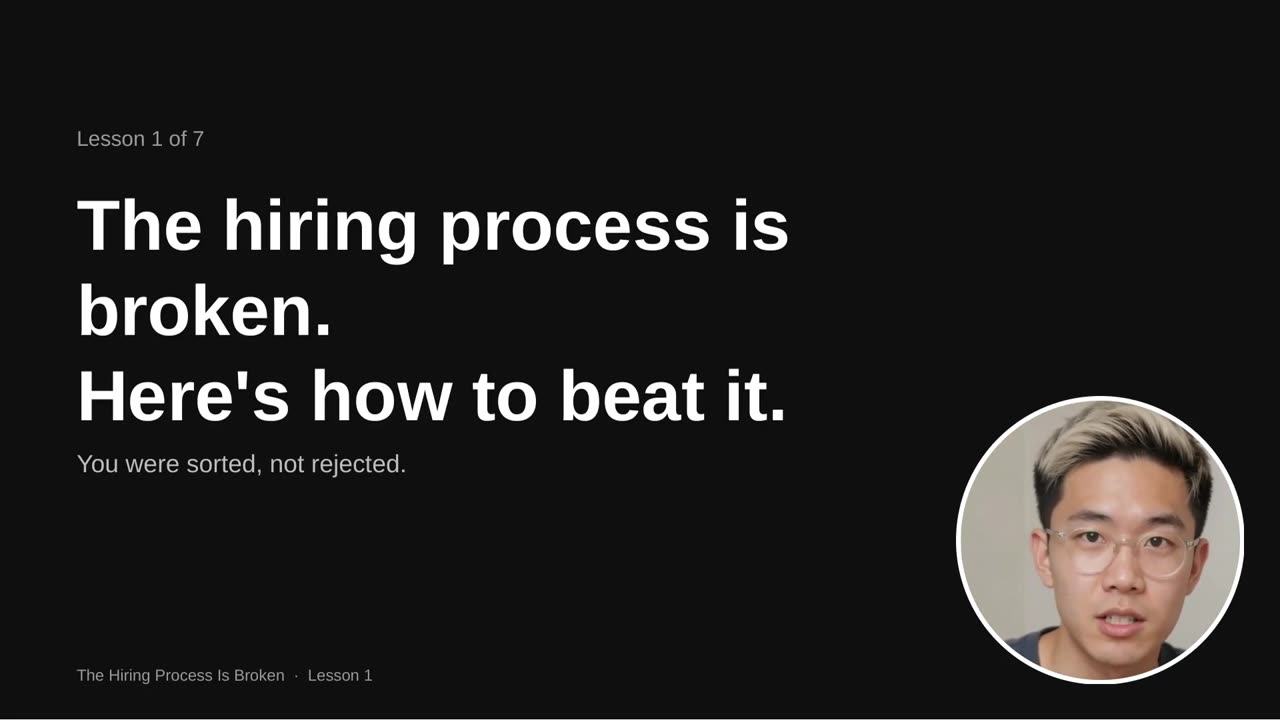
You were sorted, not rejected. How the ATS actually orders you, the three ways software drops you, and the 48-hour rule.

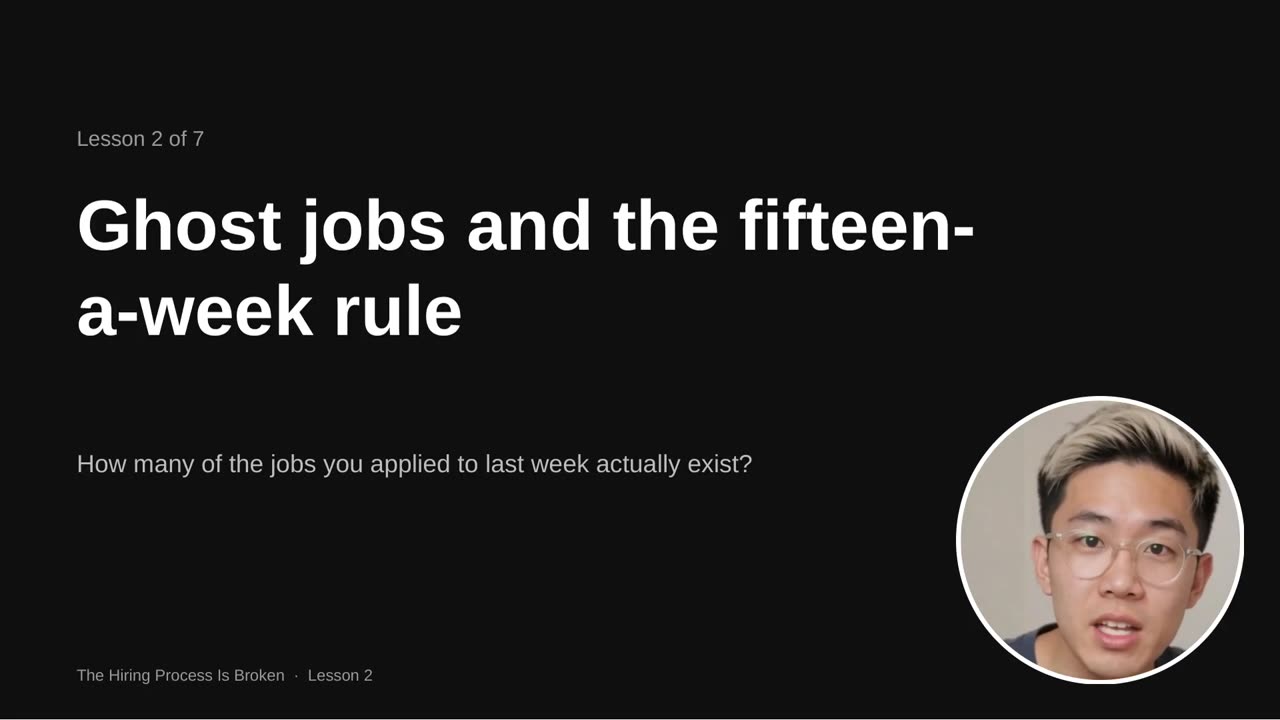
A fifth to a third of postings will never hire anyone. Six signals, sixty seconds, and why fifteen applications beat sixty.

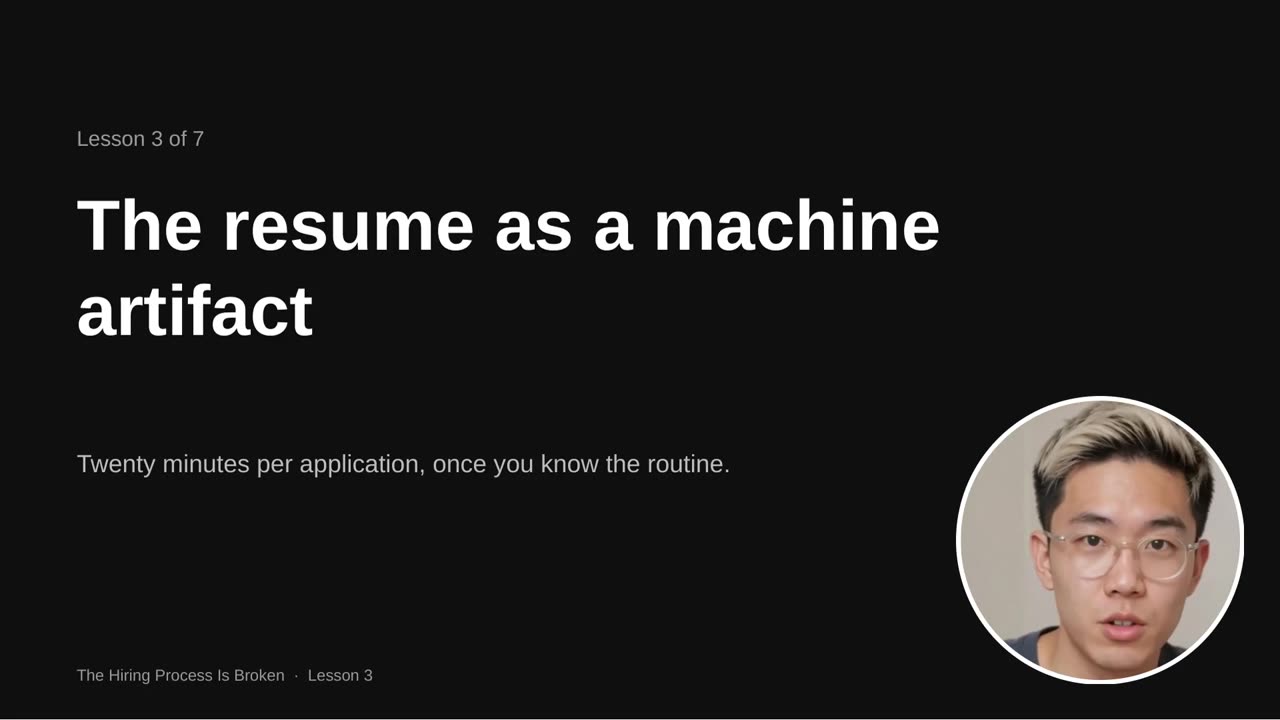
Tailoring is swapping, not rewriting. The twenty-minute routine, the parse test, and the bullet that survives both readers.

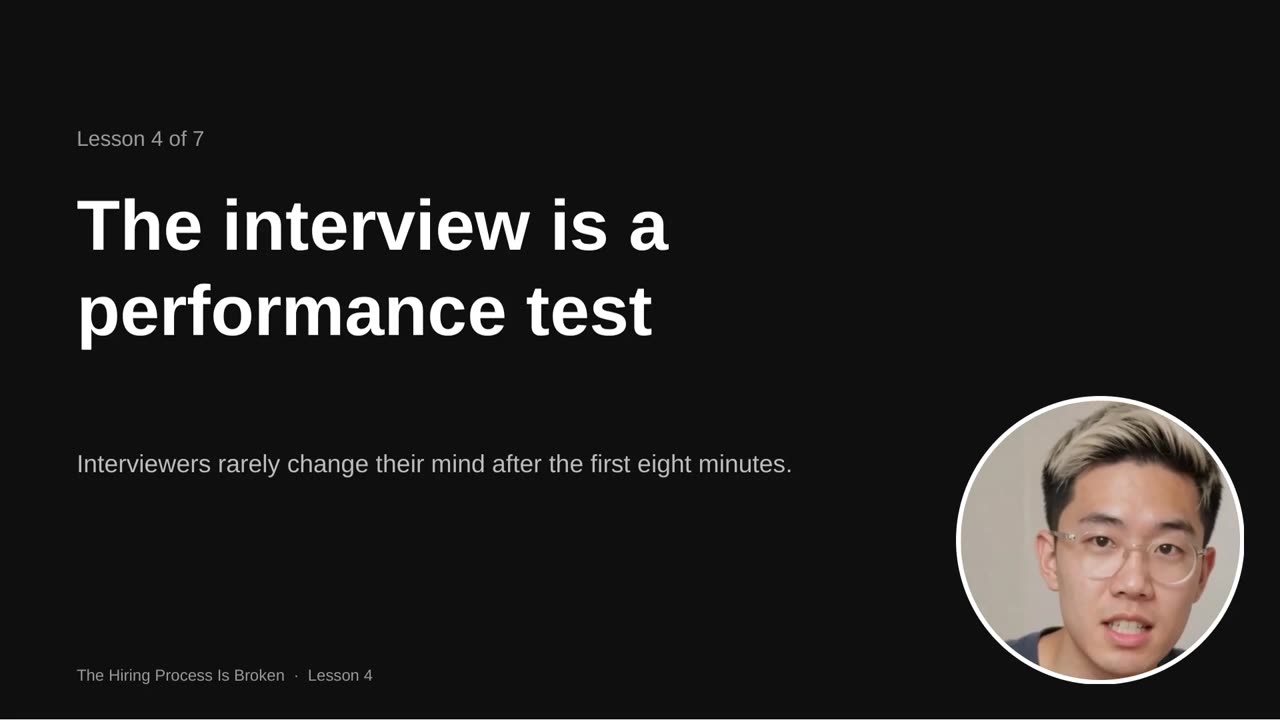
The scorecard is written from memory an hour later. Structure beats content, and the first eight minutes set the anchor.

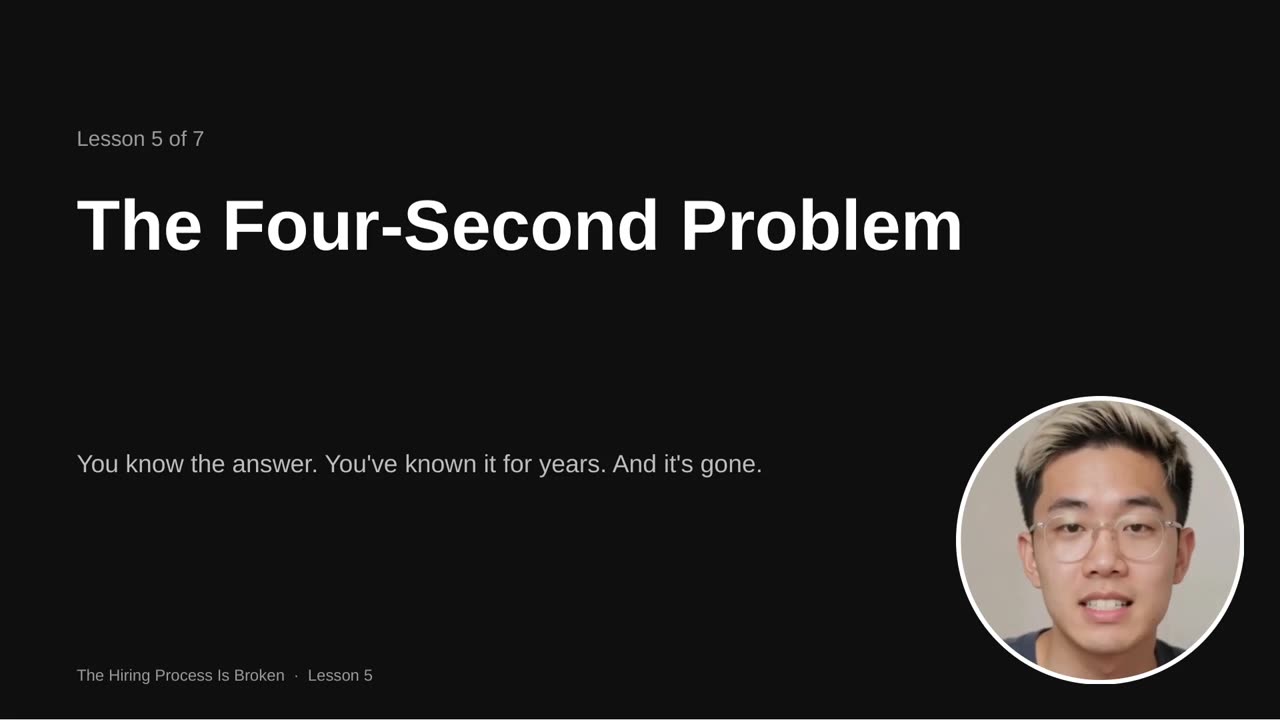
Blanking is working memory, not knowledge. What to do before the call, during it, and the tool that puts your own answer on screen.

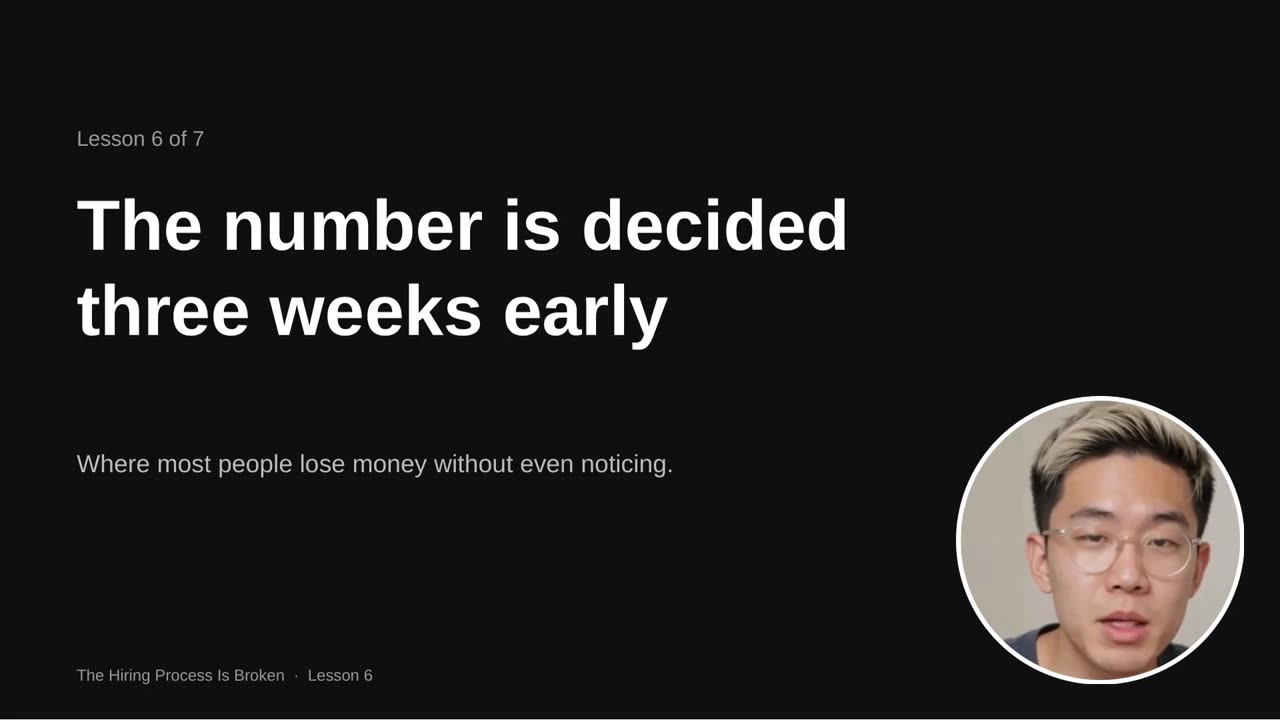
Why minute twelve of the recruiter screen decides your offer, what's actually negotiable, and the counter: once, in writing.

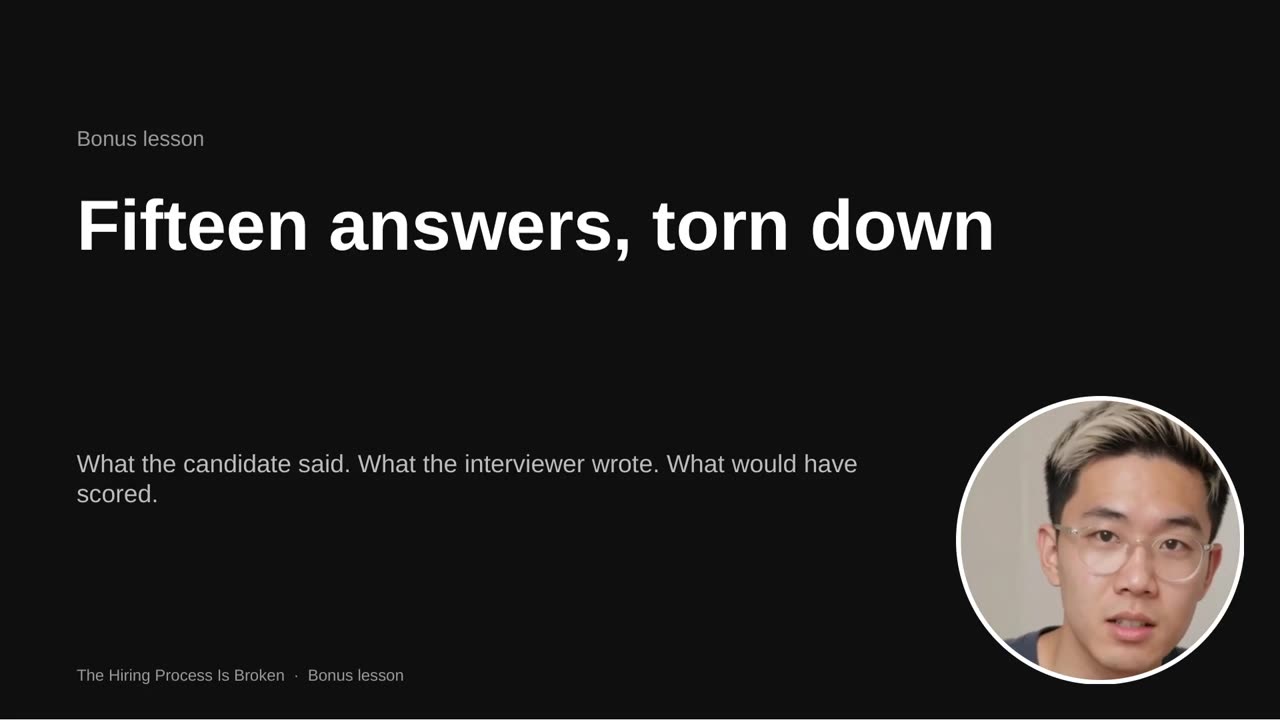
Fifteen real answers. What the candidate said, what the interviewer wrote, what would have worked.
The Upskiller Copilot is a Mac app that listens to the interview, and when a question lands, one key press streams a structured answer into a private overlay: the story header, the framework, the number you rehearsed. Tuned to your resume. Invisible to screen sharing on Zoom, Meet and Teams.
How this is different
See for yourself
Every entry has the same three parts. This is number 03, "Tell me about a failure."
Early in my career I underestimated how long a project would take and we missed a deadline. I learned that I should be more careful with estimates and communicate earlier when things are slipping. Since then I've been much better about setting realistic timelines.
Last year I shipped a config change to the payment retry logic that caused about 40 minutes of duplicate charge attempts on a Friday evening. Nobody was double-charged because of downstream idempotency, but it paged three people and I was the one who'd skipped the canary because it was "just config". I ran the post-mortem myself. Config changes to that service now go through the same canary path as code, and I wrote the check that enforces it.
Recent, real, the candidate's own decision named as the cause, and a fix they built. Fourteen more like this inside, and the bonus lesson walks through all fifteen.
Six gates, six modules, from the funnel to the offer.
What was said, what the interviewer wrote, the version that scores.
The nouns the filter wants and the round that decides, per track.
Interview menu, tracker with a ghost-job score, two resumes.
Why it works
A good resume sent on day six sits below a decent one sent on day one. The 48-hour rule alone changes who reads you.
Ghost jobs eat your best hours. Sixty seconds and six signals tell you which ones to skip.
The scorecard is written from memory. An answer that's easy to write down beats a clever one that isn't. The first eight minutes set the anchor.
What you say at minute twelve of the recruiter screen sets the band. The counter happens once, in writing.
Why $27
Because it's the front door to Upskiller. I'd rather a thousand people get the map for the price of lunch and some of them keep the tool, than sell a $300 course to thirty.
The price goes up to $37 after the first 500 copies. The content doesn't change.
Thirty days, no questions, and you keep the files. Reply to your receipt or write to microsaasempiredev@gmail.com.
Everything you get
| 7 video lessons54 minutes, one task each | $29 |
| The manual22 pages, six modules | $17 |
| The Answer Bank15 teardowns with scorecard notes | $12 |
| Role Tracks and 4 templatesFrontend, backend and infra, data and ML | $18 |
| 30 days of Upskiller ProWith the interview Copilot, no card | $49.99 |
| Every future editionUpdates when hiring changes | free |
| If bought separately | $125.99 |
Questions
Right after checkout you land on the course page, and the link is in your receipt email too. No login, no app to install. Bookmark it, it's yours for good, including future editions.
54 minutes of video in seven lessons, plus one short task after each. Most people do it over a week. Lesson one takes seven minutes.
The examples are software engineering. The mechanics, ATS, AI screening, ghost jobs, interview scoring, negotiation, are the same for PMs, designers and data roles. If you interview at tech companies, it applies.
Lessons 1 to 3 will confirm things you've suspected. Lessons 4 to 6 and the Answer Bank are written from the interviewer's side, and that's the part senior candidates say they didn't have.
Reading notes on a second screen isn't, and this is the same idea with faster page turns. It doesn't speak or type for you, and it can't rescue an answer you never prepared. Lesson 5 explains why blanking is a working-memory problem, not a knowledge problem. Use your own judgement about where you'd use it.
The Copilot is macOS today with Windows on the way. Everything else in Pro, Job Matcher, tailored CVs, AI mock interviews, the Career Counselor, runs in the browser. Your 30 days only start when you activate them.
No card, so there's nothing to forget to cancel. It expires after 30 days unless you subscribe.
The lessons are presented by an AI avatar of Cris. The material is written by people who've sat on both sides of the hiring table.
30 days, no questions, and you keep the files. Reply to your receipt email.

Send us your LinkedIn profile and we'll email you the full manual, same content as in the course. The paid course adds the video lessons, the Answer Bank, Role Tracks, the templates and the Pro month.
If it helps you land something, pass it on to someone else who's looking.
Get the free manual